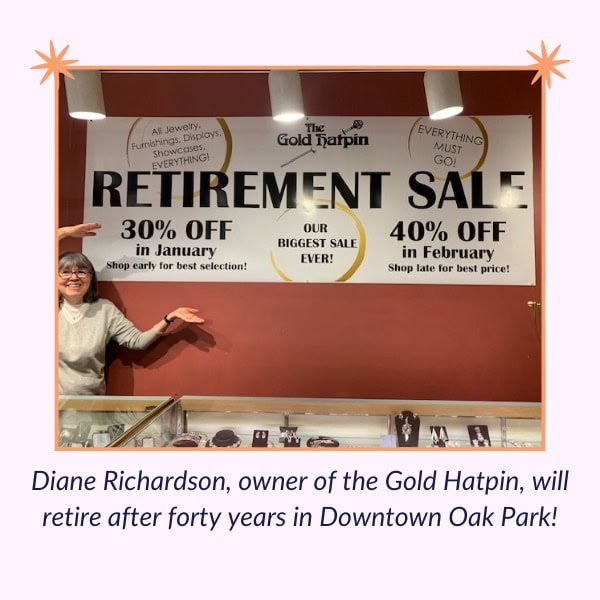
We spoke with local business owner and vintage jeweler Diane Richardson, who is retiring after 40 years. Be sure to stop by the store; the Gold Hatpin is hosting a retirement sale, offering 30% to 40% off on everything in the store from now until the store closes on February 22, 2026.
Do you have a favorite era or designer—and why?
Although I enjoy all periods of jewelry, my favorites are the romantic, lighter looks from the early years of the 20th century, which are considered the Edwardian period, and the sleek, bold, geometric shapes and colors of Art Deco jewelry. Both styles reflect what was going on in fashion and the culture of their era,s which I find appealing.
Which eras or styles do you think are most misunderstood?
Trends in antique jewelry come and go. When I was first in business in the late ’80’s and early ’90’s, the fashion was for BIG jewelry. There was no such thing as too big, so Victorian jewelry, including large-scale cameos, bracelets, brooches, and earrings were in vogue, just like big hair and shoulder pads. As fashion changes, so does the fashion in antique jewelry. With the exception of the high-end designers, I think Retro jewelry created during the war and post-war years of the 1940’s is the most under-appreciated, if not misunderstood, jewelry.

What are some pieces that you would like to highlight in your collection?
I have a fabulous 14k gold Victorian, drippy, fringe necklace I’m selling from my personal collection. There’s a rare pair of 14k hand-engraved and enameled wedding bracelets, so named because one bracelet was given at the bride’s betrothal and the second on her wedding day, to be worn on each wrist as was customary at the time. Often, the pairs were split between the inheriting daughters or granddaughters, so having a matched pair is a treasure. I believe we still have the largest selection of antique and estate, natural diamond engagement rings and wedding bands in the Chicago area.
Forty years—do you have any advice for people starting in the antique business?
Yes! Buy what you like, what excites your curiosity, and what motivates you to research and learn about your items. Sharing your knowledge and enthusiasm for the merchandise will help you sell. Honesty, trustworthiness, and reliability, those same qualities that your parents taught you were important, go a long way towards gaining and keeping lifelong, appreciative customers.